


 Cart
Cart
 sales@molnova.com



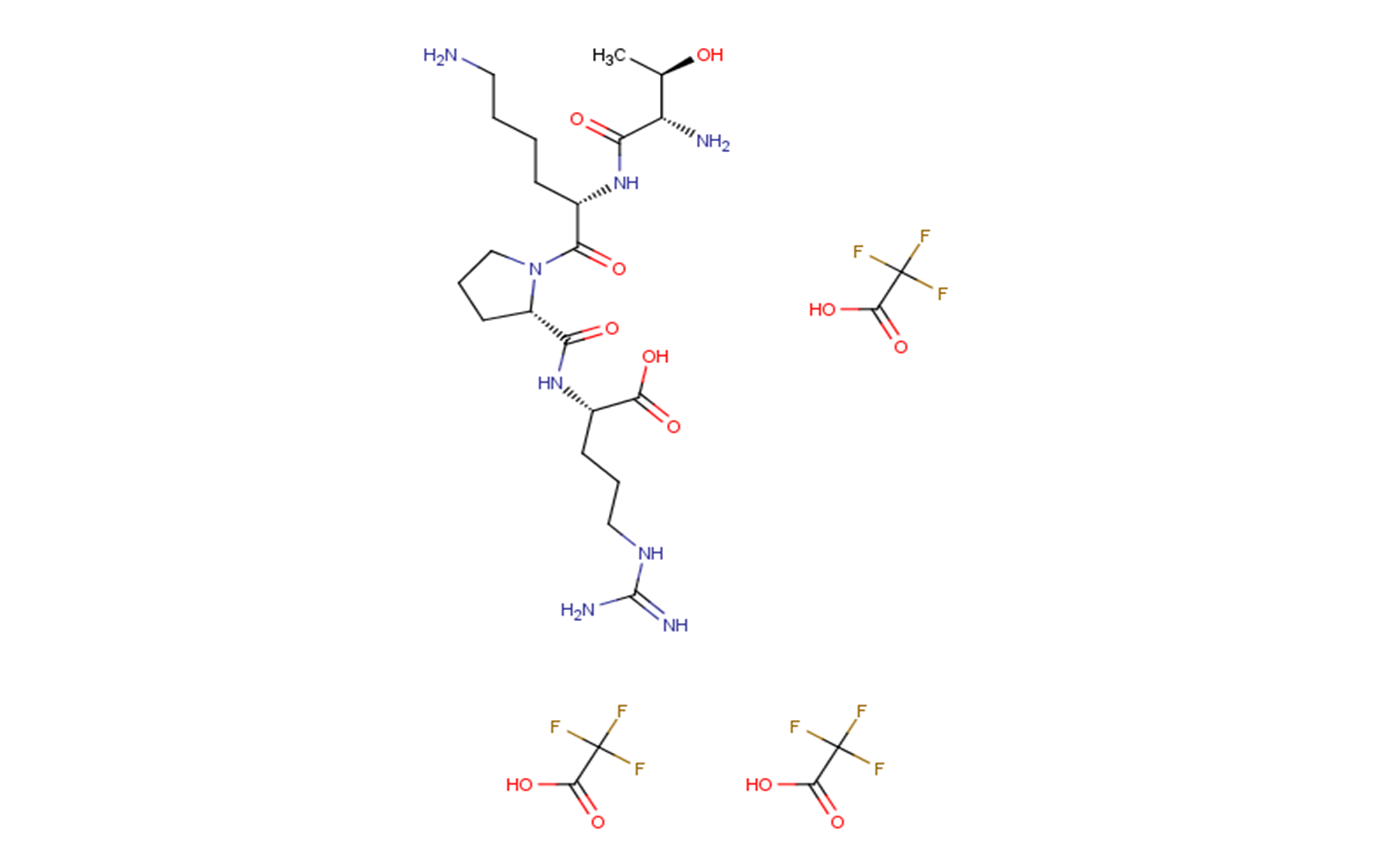
Tuftsin 3TFA
CAS No. 81019-03-6
Tuftsin 3TFA( —— )
Catalog No. M22896 CAS No. 81019-03-6
Tuftsin 3TFA is a tetrapeptide. It is a macrophage/microglial activator.
Purity : >98% (HPLC)
 COA
Datasheet
HNMR
HPLC
MSDS
Handing Instructions
COA
Datasheet
HNMR
HPLC
MSDS
Handing Instructions
| Size | Price / USD | Stock | Quantity |
| 5MG | 43 | In Stock |


|
| 10MG | 61 | In Stock |
|
| 25MG | 119 | In Stock |
|
| 50MG | 177 | In Stock |
|
| 100MG | 267 | In Stock |
|
| 200MG | Get Quote | In Stock |
|
| 500MG | Get Quote | In Stock |
|
| 1G | Get Quote | In Stock |
|
Biological Information
-
Product NameTuftsin 3TFA
-
NoteResearch use only, not for human use.
-
Brief DescriptionTuftsin 3TFA is a tetrapeptide. It is a macrophage/microglial activator.
-
DescriptionTuftsin 3TFA is a tetrapeptide. It is a macrophage/microglial activator.
-
In Vitro——
-
In Vivo——
-
Synonyms——
-
PathwayProteasome/Ubiquitin
-
TargetEndogenous Metabolite
-
RecptorHuman Endogenous Metabolite
-
Research Area——
-
Indication——
Chemical Information
-
CAS Number81019-03-6
-
Formula Weight842.66
-
Molecular FormulaC27H43F9N8O12
-
Purity>98% (HPLC)
-
Solubility——
-
SMILESO=C(N[C@@H](CCCNC(=N)N)C(=O)O)[C@@H]1CCCN1C(=O)[C@H](CCCCN)NC(=O)[C@@H](N)[C@@H](C)O.FC(F)(F)C(=O)O.FC(F)(F)C(=O)O.FC(F)(F)C(=O)O
-
Chemical Name——
Shipping & Storage Information
-
Storage(-20℃)
-
ShippingWith Ice Pack
-
Stability≥ 2 years
Reference
molnova catalog



related products
-
CMP-Sialic acid sodi...
CMP-Sialic acid sodium salt (CMP-Neu5Ac sodium salt) is a variant inhibitor of UDP-GlcNAc 2-epimerase, the activated form of sialic acid, which is widely found in animals and is involved in the metabolism of organisms.
-
D(+)-Xylose
Xylose or wood sugar is an aldopentose - a monosaccharide containing five carbon atoms and an aldehyde functional group. It has chemical formula C5H10O5 and is 40% as sweet as sucrose.
-
Oleoylcarnitine
Oleoylcarnitine (Oleoyl-L-carnitine) inhibits adenine nucleotide translocase (AdNT) activity with an ic50 of 14 μM.Oleoylcarnitine is an important indicator of neurodegeneration.
